Tree Surgery & Arborist Services in Essex & Suffolk
If you need a tree surgeon in Essex or Suffolk, the first question is not always which service to book. It is often what the tree actually needs.
A tree may have outgrown its position, developed damaged branches, started obstructing a road or building, or simply need sensible management to keep it suitable for its surroundings. In some cases removal is the right answer. In many others, careful pruning or crown work can deal with the problem while retaining the tree.
We carry out tree surgery for homeowners, businesses, landowners, developers and other organisations across Essex and Suffolk. The work ranges from pruning an individual garden tree to planned arboricultural work on larger commercial sites.
What Does A Tree Surgeon Do?
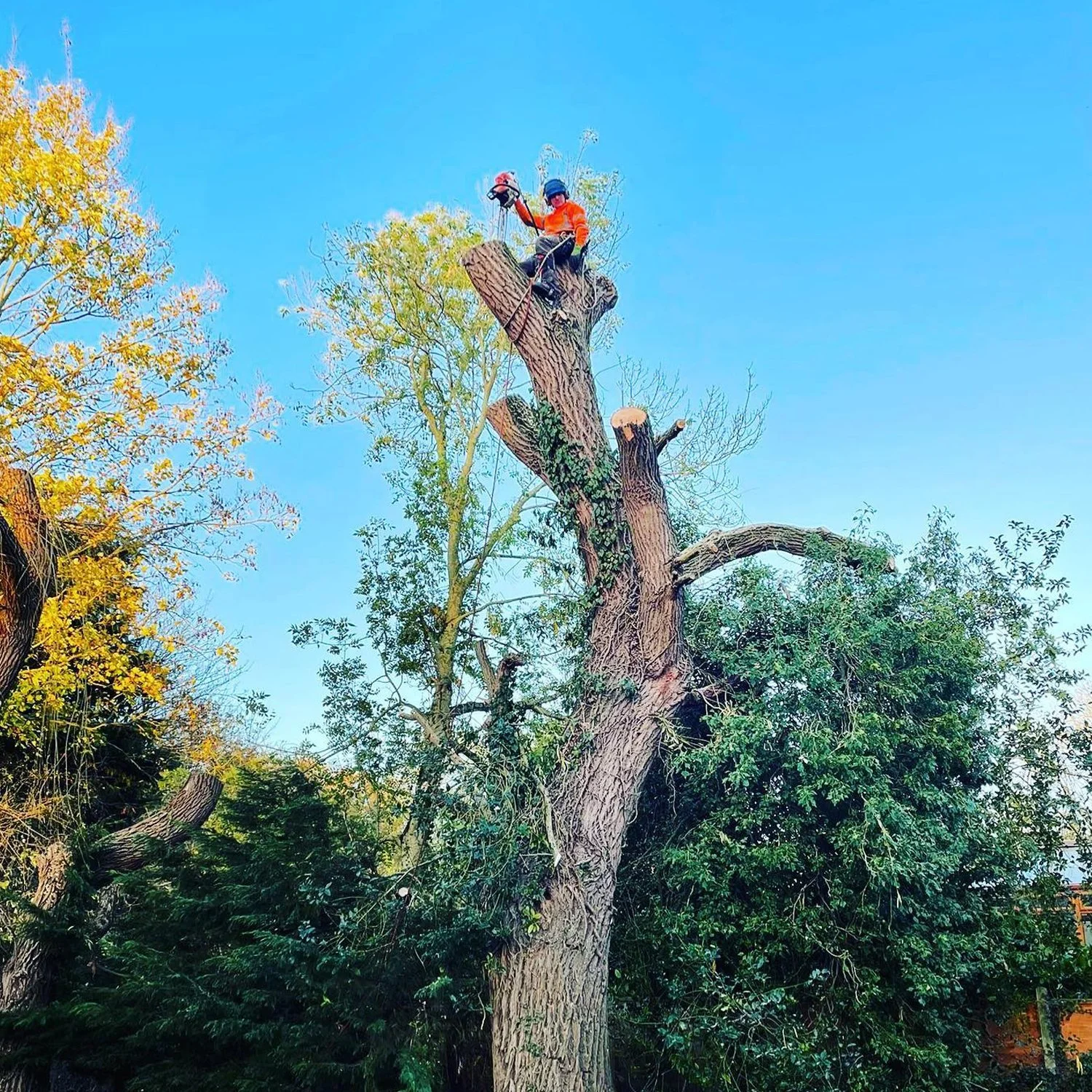
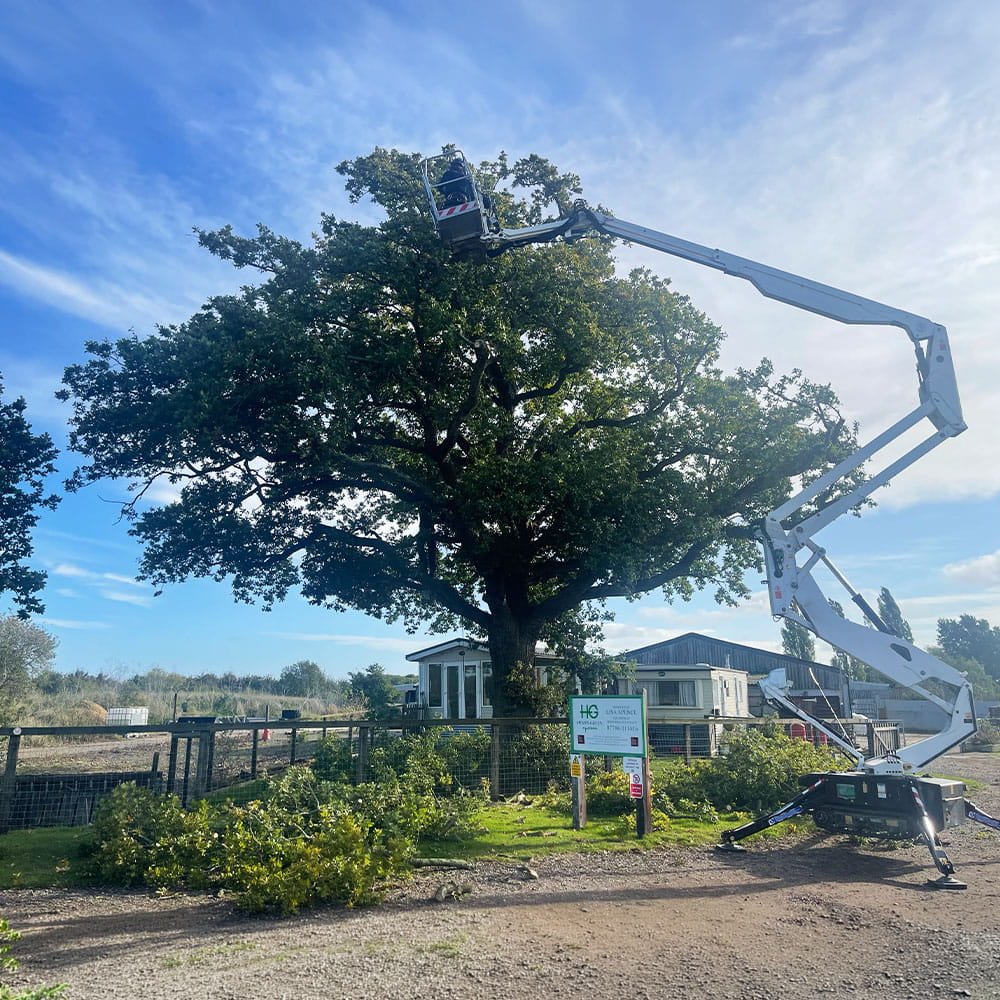
A tree surgeon carries out practical work to inspect, manage, prune and remove trees. That can involve climbing branches, working from specialist access equipment, operating chainsaws, lowering timber in sections, and/or managing the ground around the tree while the work is underway.
The job should not simply be about cutting branches. Before any work starts, the tree itself needs to be considered – its species, age, condition and structure all matter. As does the setting, including nearby buildings, roads, boundaries, overhead services, access and the space available below.
At Blake Tree Care, we first visit the site and inspect the tree before recommending the work. The inspection is carried out by an experienced tree surgeon who is also a Lantra-qualified Tree Inspector. This means that, when this assessment is carried out, our customers benefit from working with professionals with both years of practical, hands-on tree surgery experience and formal tree inspection training.
This initial assessment helps determine the right approach; whether that is pruning, a particular type of crown work, removal or no immediate work at all.
Is A Tree Surgeon The Same As An Arborist?
The terms overlap and are often used interchangeably. “Tree surgeon” tends to describe someone who is carrying out practical tree work. “Arborist” is a broader term that can also include tree inspection, management and advice.
Whichever term a company uses, the useful questions are the same: Are the people doing the work trained for the tasks involved, properly insured, and able to explain why the proposed work is appropriate?
Tree Surgery Services We Carry Out
Tree Pruning And Crown Work
Pruning and crown work involve removing damaged branches, improving clearance, or managing a tree that has become too large for its position.
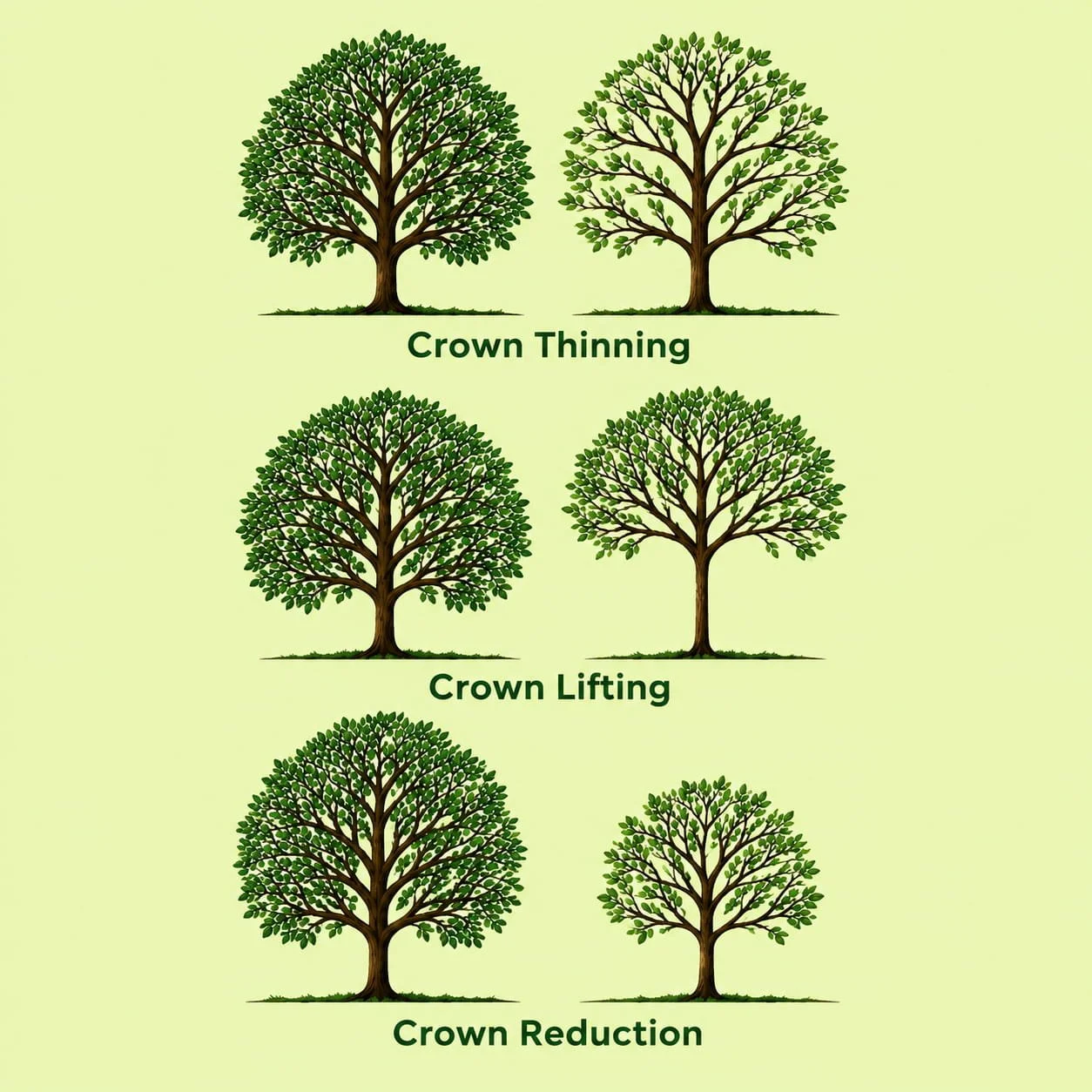
Different types of crown work achieve different things:
Crown reduction reduces the overall height or spread of the tree while retaining its natural shape where possible.
Crown thinning selectively removes branches throughout the canopy to reduce its density without substantially changing its overall size.
Crown lifting removes or reduces lower branches to create more clearance beneath the tree.
These terms are not interchangeable. The most suitable option depends on the tree, the reason for the work and what surrounds it.
Tree Removal And Sectional Dismantling
Tree removal may be appropriate when a tree is dead, structurally unsuitable for its position, cannot reasonably be managed through pruning, or needs to be removed as part of approved site work. It should not be the automatic recommendation for every damaged, mature or inconvenient tree.
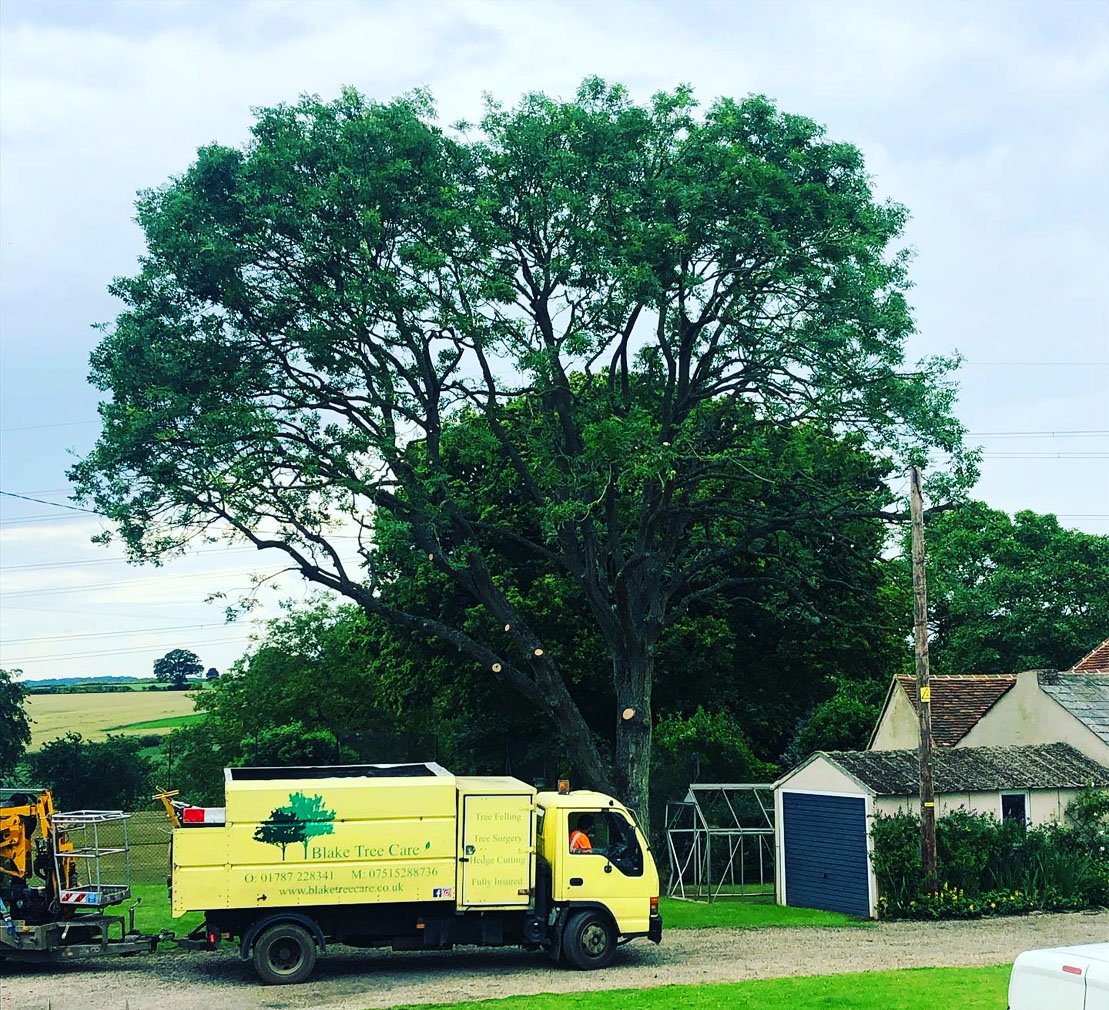
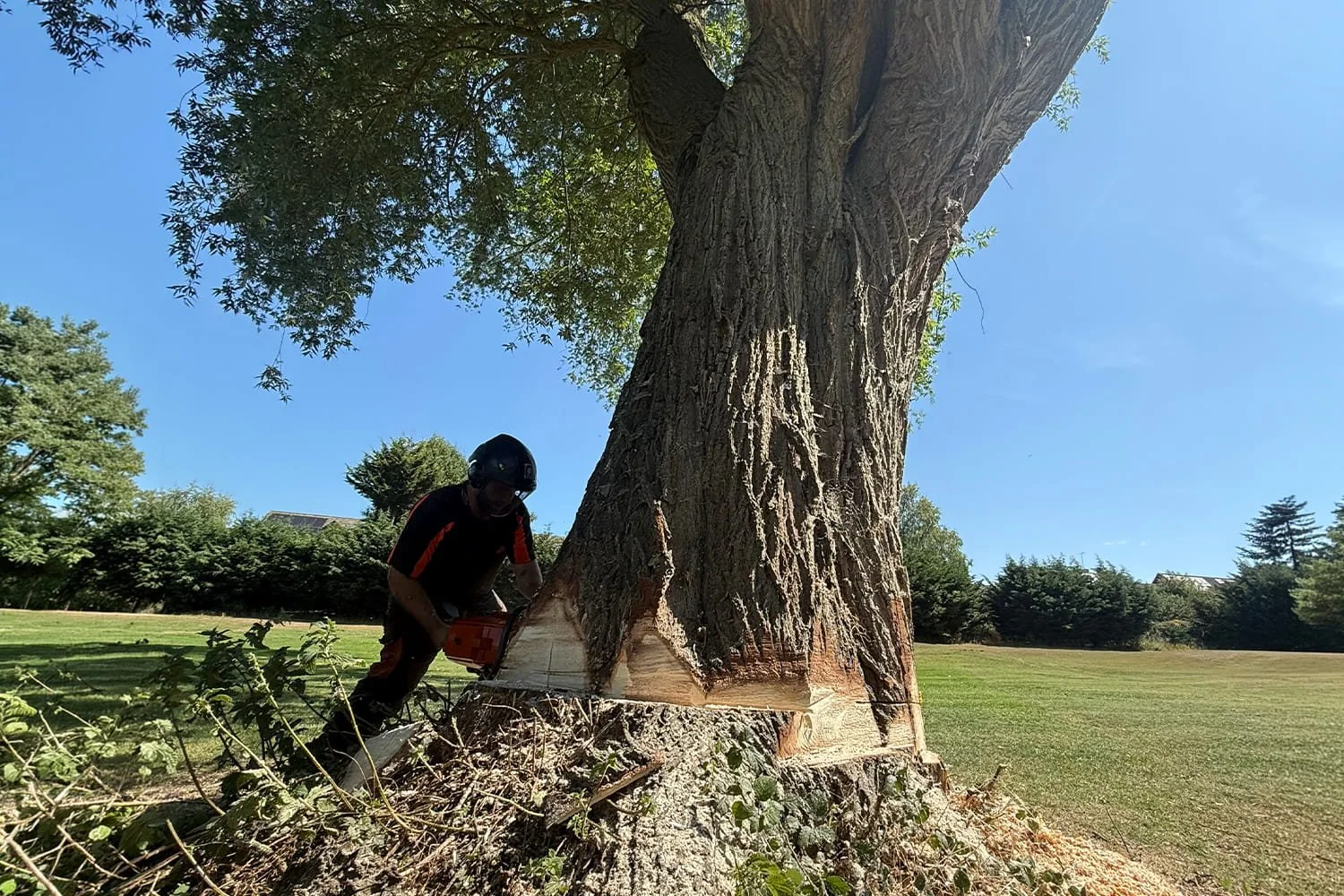
Some trees can be felled in one piece, but only where there is enough clear space. In gardens, built-up areas and busy sites, that is sometimes not possible. This is where sectional dismantling comes in, where the tree can be taken down in smaller, controlled pieces. Branches and sections of timber can be lowered carefully where there are buildings, fences, roads, neighbouring gardens or other features beneath the tree.
Stump Removal
After a tree has been felled, the stump can be left in place or removed, depending on what is planned for the area. Stump removal may be useful where the ground is going to be replanted, landscaped or used for access.
It is worth confirming whether stump work is included in a quotation. Felling a tree and removing its stump are usually treated as separate parts of the job.
Tree Inspections And Advice
Not every enquiry starts with a known solution. You may have noticed dead branches, a change in the canopy, cracking, movement around the base or damage following strong winds. These signs do not all mean that a tree is dangerous, but they can justify a closer look, particularly where the tree is close to a home, road, workplace or public area.
An inspection considers the whole tree and its surroundings. It is more reliable than trying to diagnose a structural or health problem from one symptom or a photograph alone.
Commercial Tree Surgery And Larger Sites
Commercial tree work usually needs more planning than an isolated garden job. Access, site users, traffic, working hours, other contractors and the sequence of the work may all affect how it is organised.
We work with businesses, landowners, developers and other organisations on commercial tree surgery, site clearance, vegetation management, forestry and woodland work. The scope and practical arrangements are agreed around the site rather than treating every project like a domestic call-out.
How Much Does Tree Surgery Cost?
There is no single useful answer without seeing the tree and the site. Two trees of a similar height can involve very different amounts of work.
The quotation may be affected by:
the size, species and condition of the tree
whether the work is pruning, felling or sectional dismantling
access for the team and equipment
how branches and timber need to be lowered or moved
whether timber, branches and woodchip are being removed from site
whether stump removal is required
planning, traffic management or other site requirements
A straightforward tree with open access is a different job from a tree growing over a conservatory or beside a road. Which is why, at Blake Tree Care, we arrange a site visit before providing a firm quotation. This allows us to inspect the tree properly, understand access and site constraints, discuss what the customer wants to achieve and make sure the proposed work is clearly understood before it is priced.
When comparing prices, check that each contractor has quoted for the same work. One price may include leaving the site tidy, while another may cover the cutting alone. The written description should make clear what is being done and what will happen to the timber, branches and stump afterwards.
Do I Need Permission Before Tree Work Starts?
Possibly. A Tree Preservation Order, usually called a TPO, protects a tree from cutting down, topping, lopping, uprooting, wilful damage or destruction without the local planning authority's written consent, unless a specific exception applies.
Trees in a conservation area can also be protected even when they are not covered by a TPO. In many cases, the local planning authority must be given six weeks' notice before work starts.
Other controls can apply as well. Larger-scale felling may require a felling licence, and work must take account of protected wildlife. These checks should be made before the saws come out, not after the job has started.
If you are unsure whether a tree is protected, check with the relevant district, borough or city council. The work specification also needs to be clear enough for an application or notice to describe exactly what is proposed.
What Qualifications And Insurance Should A Tree Surgeon Have?
Chainsaw work and aerial tree work involve different tasks, equipment and risks. The Health and Safety Executive states that chainsaw operators must have received adequate training relevant to the work they carry out.
When choosing a contractor, ask for evidence rather than relying on a logo or a general claim. Useful checks include:
training and competence for the specific chainsaw, climbing or machinery work involved
public liability insurance appropriate for tree work
employers' liability insurance where applicable
a written quotation that identifies the proposed work
a clear answer about waste, timber and stump removal
an explanation of any permissions or notices that may be required
recent, relevant work or customer feedback
Arboricultural Association Approved Contractor status is one recognised, independently assessed standard, but membership of an organisation and contractor approval are not the same thing. If a company makes a particular claim, it should be able to show current evidence.
How To Choose A Tree Surgeon In Essex Or Suffolk
Start With The Proposed Work
A useful quotation should say more than “prune tree” or “cut back branches”. It should identify the tree where necessary, describe the work clearly and explain the intended outcome.
If crown reduction is proposed, for example, ask what is being reduced and by approximately how much. If removal is recommended, ask why pruning or ongoing management would not deal with the issue.
It is also important to agree the extent and intended outcome of the work before anything is cut. For example, if a customer agrees to a 3-metre crown reduction, they cannot change their mind to only a 2-metre reduction once the tree has been cut. That is why the initial site visit and discussion are so important – they give arborists the opportunity to understand the customer’s ideas and expectations before anything is cut.
Compare Like With Like
The lowest figure is difficult to assess if it excludes work that another contractor has included. Ensure that access arrangements, clearing up, timber removal, stump work and VAT have been accounted for before comparing like for like.
Be Cautious With Vague or Unnecessary Work
Tree work should have a reason. Be wary if there is no or very little explanation as to why a tree “needs topping”. Good advice should relate to the particular tree and its setting.
Use Local Knowledge Sensibly
Searching for a tree surgeon near you is useful, but proximity on its own does not establish competence. A contractor working regularly across Essex and Suffolk should be able to show proof of their expertise and demonstrate an understanding of the practical differences between a small garden, a roadside tree, a rural property and a working commercial site.
Blake Tree Care works across both counties, including areas served by our local pages for Colchester, Chelmsford, Braintree, Maldon, Ipswich, Bury St Edmunds and Sudbury.
What Happens After You Get In Touch?
The first step is to understand what is happening with the tree and what you want to achieve. In many cases, that means arranging a no-obligation visit so we can assess the tree, access and surroundings properly.
We can then explain the suitable options and provide a quotation for the agreed work. If a permission check or application is needed, that should be dealt with before work is scheduled.
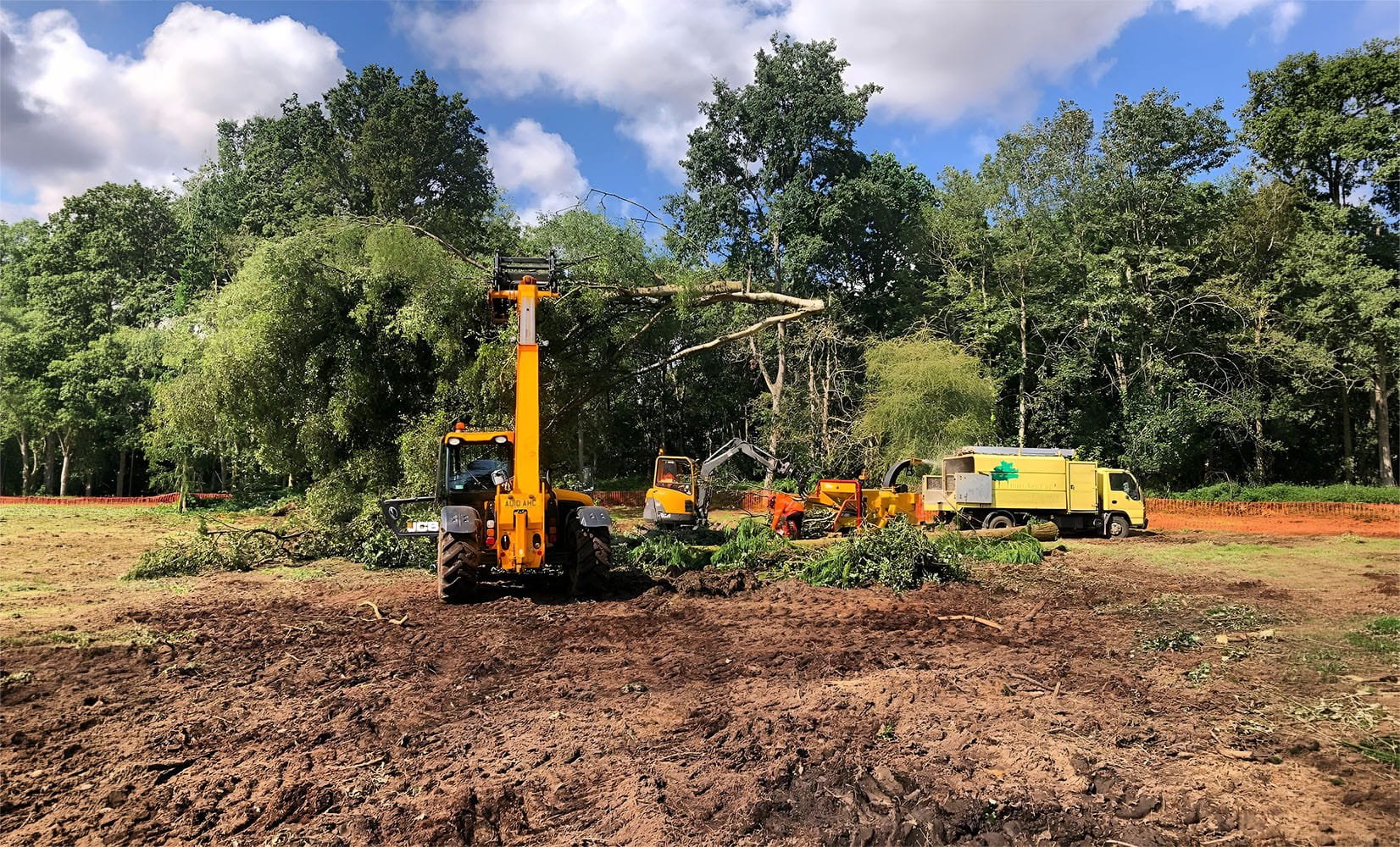
As the project is carried out, the working area and access requirements around the site are managed. The exact method depends on the job: some trees can be worked on directly, while others need sections lowered or moved in a controlled way. The agreed arrangements for branches, timber, woodchip and any stump work should already be clear from the quotation.
Frequently Asked Questions
-
A tree surgeon inspects, prunes, manages and removes trees. The practical work can include climbing, chainsaw use, crown reduction, crown lifting, branch removal, sectional dismantling and handling timber on the ground.
-
The cost depends on the tree, the work, access and what surrounds it. Waste removal, stump work, traffic management and other site requirements can also affect the quotation. At Blake Tree Care, a site visit is arranged before a firm quotation is provided so the tree and site can be assessed and the proposed work agreed.
-
Small, reachable pruning jobs may be manageable for homeowners with suitable tools and knowledge. Work involving chainsaws, climbing, large branches, damaged trees or anything close to buildings, roads or overhead services should be assessed by someone trained and equipped for it.
-
Many tree surgery businesses offer stump removal, but it is usually separate from felling. Ask whether the stump is being left, cut low or removed, and make sure the quotation reflects what you need.
-
Yes, but consent or notice may be required before work begins. Trees covered by a TPO normally require an application to the local planning authority. Many trees in conservation areas require six weeks’ notice. Limited exceptions exist, so check the position rather than assuming an urgent-looking or dead tree is automatically exempt.
Some companies offer this service as part of their offering. Where a TPO application or Conservation Area notification is required for tree work that we have quoted for, Blake Tree Care includes this service without additional charge. We prepare and submit the application or notification based on work we have inspected and recommended. This ensures that the approved work matches the specification in our quotation.
-
Look for relevant training, suitable insurance, clear written quotations and an explanation of why the proposed work is right for the tree. Compare the same scope of work between contractors and ask for evidence of any accreditations or approval schemes they mention.
Discuss Your Tree Work
If you have a tree that needs pruning, removing or inspecting in Essex or Suffolk, get in touch with Blake Tree Care. We can look at the tree, explain the practical options and quote for the work that is actually needed.