If you are looking for a quick tree removal price, it can be frustrating to hear that the tree needs to be seen first. As a tree surgery business, we can assure you that it is not a way of avoiding the question or a sales technique. An in-person visit is incredibly important because it allows a tree surgeon to understand the job, choose an appropriate working method and prepare a quotation that reflects the actual site.
Blake Tree Care provides free, no-obligation quotations for tree removal and other domestic and commercial tree work across Essex, Suffolk, and surrounding areas. During this visit, we inspect the tree, examine the surrounding area, and explain what the proposed work would involve. This avoids any unexpected costs later.
Tree Removal Quotations at a Glance
Tree height alone is not enough to provide an accurate quotation.
The tree’s condition, position and surrounding risks must be assessed.
Access can determine the equipment, team and working method required.
Nearby buildings, roads, overhead services and protected-tree restrictions may affect the work.
The quotation must account for how branches, timber and other material will leave the site.
An inspection may establish that suitable pruning is preferable to complete removal.
Emergency work is assessed differently from a planned tree removal.
Why Is an In-Person Tree Assessment Needed?
Two trees of a similar height can be very different removals. One might stand in an open garden with direct access. The other could be close to a conservatory, only accessible through a narrow passage and too unstable to climb.
A tree removal quotation is based on more than the act of cutting a tree down. It needs to account for how the work can be carried out, what must be protected, how branches and timber will leave the site and whether any permissions or additional arrangements are required.
The visit also gives the tree surgeon a chance to determine whether complete removal is necessary. In some cases, appropriate pruning may address the problem while retaining the tree. In others, its condition or position may mean removal is the sensible option.
A quotation should therefore be based on a clear specification – not a generic rate. The following factors are among the main things we need to establish on site.
What Affects the Cost of Removing a Tree?
The Tree's Height, Spread and Trunk Size
Height is relevant, but it does not tell the whole story. The spread of the crown, the diameter of the trunk, and the size of individual branches all affect how much cutting and handling is involved.
For instance, a broad tree may contain a substantial volume of timber even if it is not especially tall. The species can make a difference too. Timber weight, branching structure and growth habit vary from one tree to another.
The site visit allows these details to be assessed properly. It also avoids relying on measurements or photographs that may make the tree look smaller or larger than it really is.
The Tree's Condition
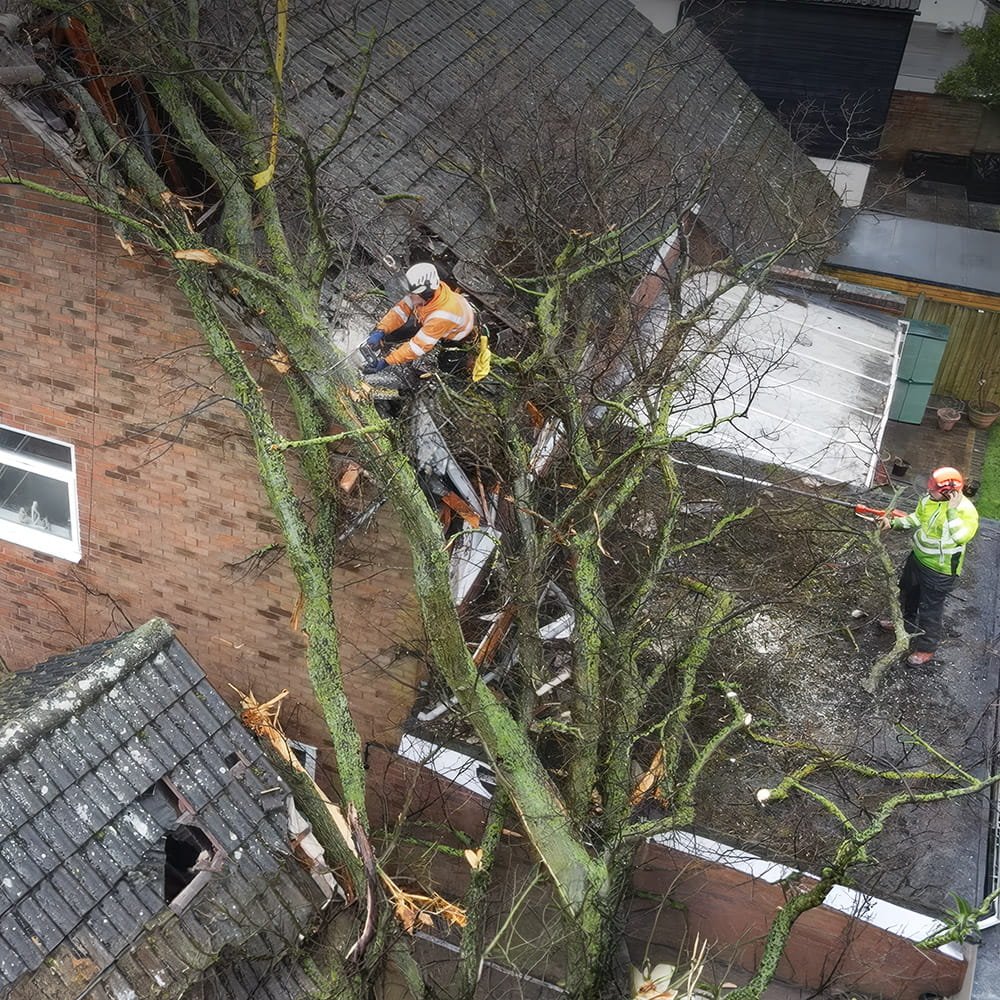
A healthy tree with sound wood presents a different set of working considerations from one that is dead, decayed, split or storm-damaged. Weak timber may not support the same climbing or rigging methods, and this kind of damage within the crown or trunk may not be obvious from photographs.
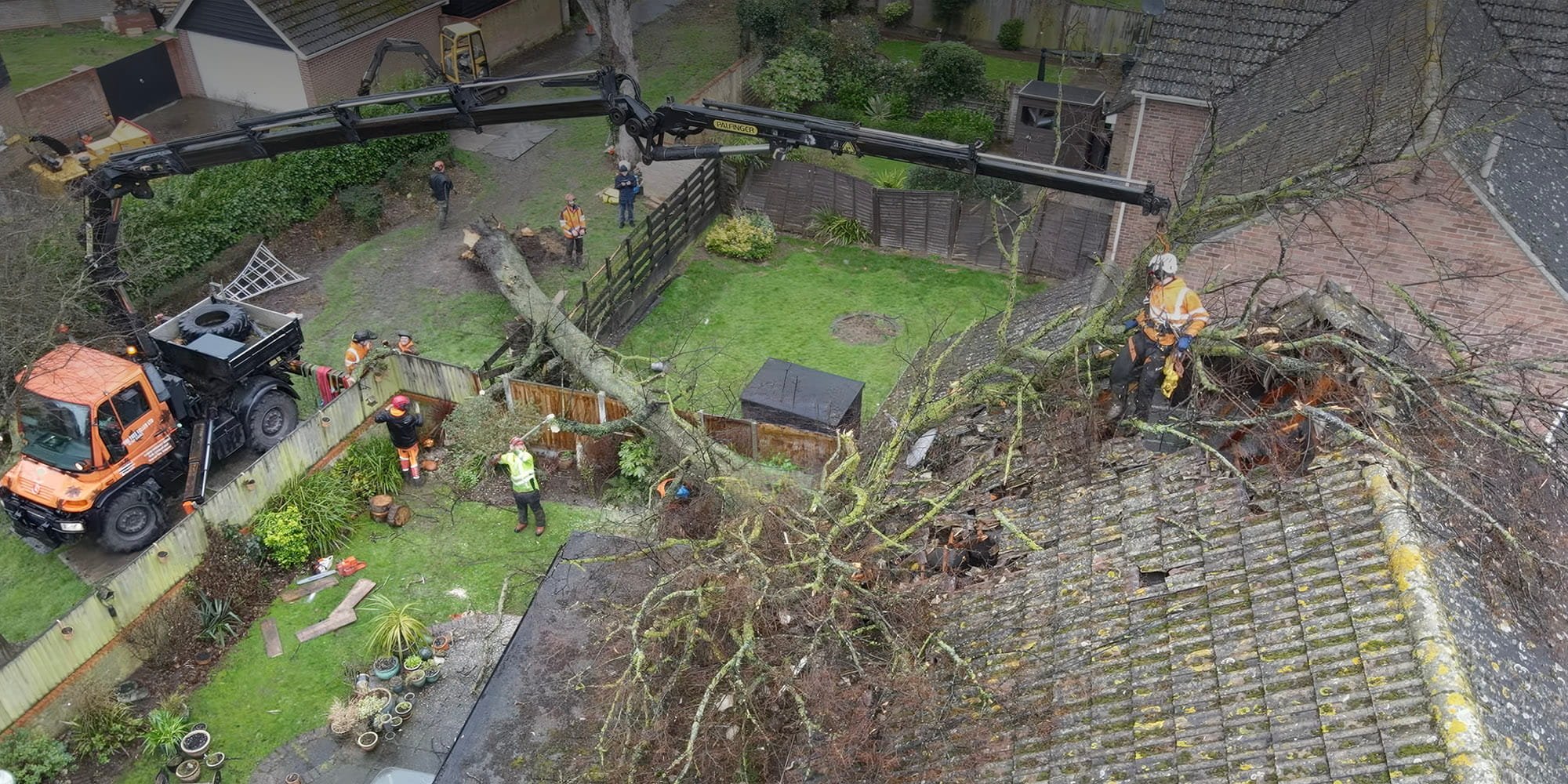
The tree's condition can change the access and sequence of work required. If a tree has partially failed, the team may also need to deal with branches or sections resting on a nearby building or tree.
This is one reason a price cannot responsibly be based on height alone. The safest workable method has to be established first.
Access for the Team and Equipment
Access has a considerable effect on a tree removal job. It is important to establish how the team will reach the tree, where equipment can be positioned, and how the resulting material can be moved out. This is especially true when grounds need to be protected. These factors strongly influence how much time and effort it will take to remove a tree.
For instance, a tree in a front garden with direct access from a driveway is very different from one behind a terraced house with a freshly laid lawn. A narrow side passage, steps, or access through the property can all affect how branches, woodchip and timber will be handled.
During the visit, we will also look at anything that needs protecting along the access route, including paving, fences, planting, grounds, and entrances that must remain usable.
The Space Around and Below the Tree
Where a suitable tree has enough clear space around it, it may be possible to fell it from the base in a controlled direction. However, many garden trees do not have that space.
Houses, extensions, sheds, greenhouses, fences, roads, parked vehicles and neighbouring property may all sit within the working area. The more restricted the space, the more carefully each part of the tree may need to be controlled.
Looking at the site in person allows the tree surgeon to identify these features and plan around them. A photograph of the trunk rarely shows everything beneath the crown or on the other side of a boundary.
Straight Felling or Sectional Dismantling
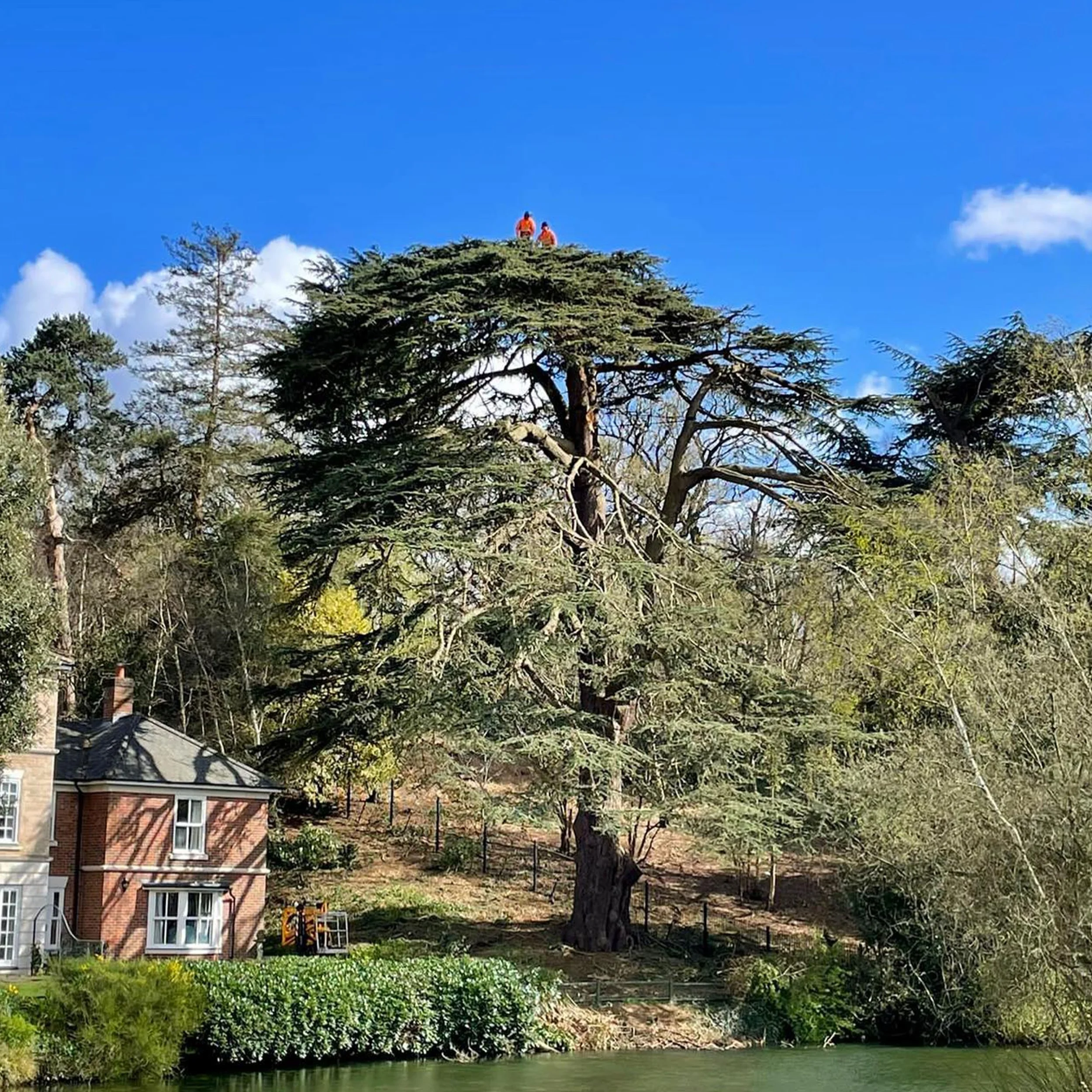
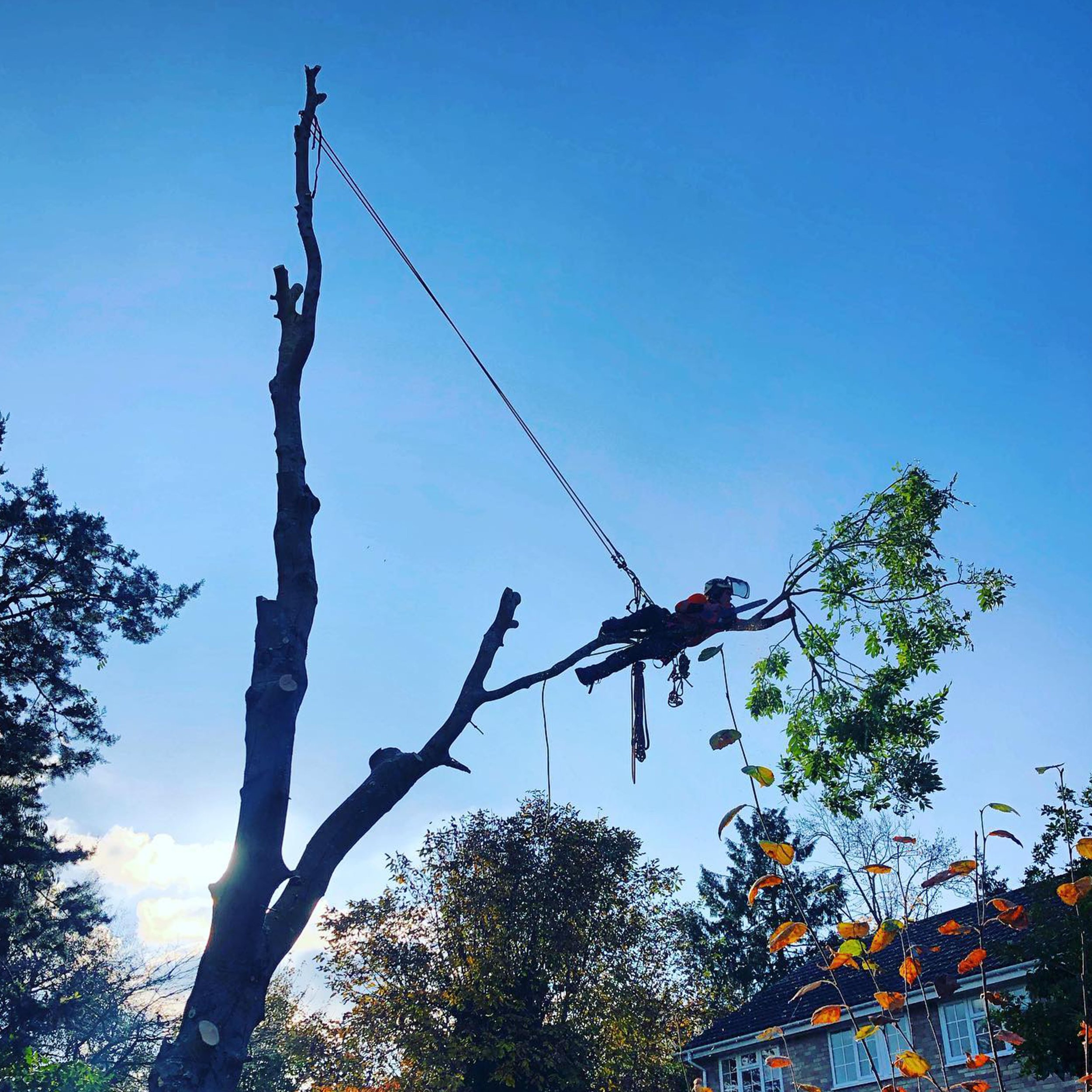
Straight felling means bringing the tree down from its base. Sectional dismantling means removing it in smaller pieces, usually working from the crown downwards. Where necessary, rigging equipment, such as ropes and pulleys, is used to carefully control and lower branches and sections of timber to the ground, rather than allowing them to fall freely. This helps protect nearby buildings, structures and surrounding areas.
Sectional dismantling generally involves more cutting, climbing, lowering and ground work than straight felling. It is often the method that makes removal possible where space is restricted or the tree stands close to something that must be protected.
Roads, Footpaths and Overhead Services
A tree beside a road or public footpath may require additional arrangements to separate the work from traffic and pedestrians. Vehicle positions, access equipment and the movement of branches or timber all need to be considered.
These issues may not be visible in a close-up photograph of the tree, which is why assessment of the wider setting is so crucial.
What Happens to the Branches and Timber
Removing a tree creates more material than many people expect. Branches may be processed into woodchip, while larger timber must be cut, moved, and either left in agreed sizes or taken away.
If you would like to keep the timber, we can discuss how you would prefer it to be prepared. This might involve cutting logs into manageable lengths, preparing shorter pieces ready for splitting, or splitting and stacking suitable timber for firewood. The amount of additional cutting and handling required can all affect the time and cost involved.
It is therefore important to agree what should happen to the timber and woodchip during the initial visit. This allows us to account for the work accurately in the quotation and ensures the site is left as agreed.
Whether Stump Grinding Is Required
Tree removal normally finishes at or close to ground level. It does not automatically include removing the stump and root system.
Stump grinding is a separate process that reduces the stump below ground level. Whether it is appropriate depends on what you intend to do with the area, as well as the access for the machine required for this process.
The site visit allows us to measure the stump area, consider access and confirm whether grinding should form part of the same quotation.
Protected Trees and Permission Requirements
Some tree work requires consent before it begins. A Tree Preservation Order, usually called a TPO, can protect an individual tree, a group of trees or woodland. Cutting down a protected tree normally requires written consent from the local planning authority unless a specific exception applies.
Trees in conservation areas are also subject to controls. Where a tree is not already protected by a TPO, a formal notification of proposed work must normally be submitted to the local planning authority at least six weeks before work begins. During this period, the authority can decide whether to protect the tree with a TPO, which would mean a separate application for consent is required. Applications for work on TPO-protected trees can be refused.
Felling licenses can apply outside ordinary garden situations, particularly where a larger volume of growing timber is involved. Forestry Commission guidance lists exceptions, including trees growing in gardens, but other controls such as a TPO or conservation-area status can still apply.
You should therefore not assume that a dead, damaged or leaning tree can be removed without the appropriate checks. Any permission requirements should be identified before a routine removal is scheduled.
At Blake Tree Care, we can manage the relevant applications or notifications on your behalf at no additional cost. This allows us to communicate directly with the local planning authority, respond to any queries and ensure the necessary permissions are in place before work begins.
Planned Work or an Emergency Response
Planned tree removal allows the site, method and practical arrangements to be assessed in advance, whereas emergency work begins from a different position. The tree may already have failed, become unstable or damaged access to the property.
The immediate task may therefore be to make the area safe rather than initiate the removal. Work outside normal hours or in a compromised site can require a different response from a planned job.
However, not every damaged tree needs an emergency call-out. If there is no immediate danger and the area can be kept clear, a planned inspection may be more appropriate.
Blake Tree Care provides a 24-hour emergency tree service across Essex and Suffolk for fallen, split or dangerous trees requiring urgent attention.
What Happens During a Tree Removal Quotation Visit?
The purpose of the visit is to gather enough information to prepare a clear scope of work. We will normally need to:
identify the tree and understand why removal is being considered
inspect its visible condition and structure
look at the space around and beneath it
check access for the team, chipper and any other equipment
consider how branches and timber can be controlled and removed
discuss what should happen to logs, woodchip and the stump
identify obvious permission or site-management requirements
answer questions about the proposed work
The visit is also the right time to mention future plans for the area. If you intend to replant, landscape, build, pave or alter access, that may affect what needs to happen to the stump and how the site should be left.
Once the job has been assessed, the written quotation can describe the proposed work and outline clearly what is included in the price. This is more useful than a broad estimate that leaves important decisions unresolved.
What Information Should You Provide When Booking a Visit?
You do not need to diagnose the tree or provide exact measurements. A few practical details will help us understand the enquiry and arrange the visit:
your address and the tree's position on the property
why you are considering removal
any access restrictions you already know about
whether the tree is close to a road, building or overhead cable
whether you know of a TPO or conservation-area restriction
whether you want the stump considered as part of the work
Photographs can be useful at this stage, particularly for an urgent enquiry. They help provide context, but they do not replace an on-site assessment for an accurate quotation.
What Should the Written Quotation Include?
A quotation should make it possible to understand what you are buying and compare like with like. The Arboricultural Association recommends checking that the work is described clearly and that the quote explains what will happen to the timber, brushwood and stump. It also advises checking whether VAT is included and who will deal with permission for protected-tree work.
Before accepting a quotation, key details to check include:
A clear identification of the trees and work proposed
Whether arisings (branches, woodchip and timber) will be removed from site or left
Whether VAT is included
Any relevant access, traffic management or site arrangements
Responsibility for TPO and conservation-area checks or applications
Blake Tree Care's operatives hold NPTC qualifications, the team is trained in Forestry First Aid, and the business is insured for domestic tree work. The quotation can therefore be prepared around the actual tree and site rather than a price guessed from a photograph.
Tree Removal Quotations Across Essex and Suffolk
We assess tree removal and sectional dismantling work for homeowners, landlords, businesses and landowners across Essex and Suffolk. Areas covered include Colchester, Chelmsford, Braintree, Witham, Ipswich, Sudbury, Bury St Edmunds, Newmarket and the surrounding towns and villages.
If you are outside one of those towns, check our full service area or get in touch. Wherever the tree is located, the same principle applies: the tree and the site need to be understood before the work can be specified and quoted accurately.
Frequently Asked Questions
-
Photographs are useful for understanding an enquiry, but they rarely show everything needed for an accurate quotation. Access, the space beneath the tree, trunk size, condition, surrounding structures and the route for removing material normally need to be assessed in person.
-
No. Height is only one factor. Crown spread, trunk diameter, tree condition, access, nearby buildings, the working method, waste handling and stump requirements can all affect the scope of the job.
-
Trees that look similar can stand in very different sites. One may be suitable for straight felling, while another needs to be dismantled and lowered in sections over a building or restricted garden. A written quote should show what work and outcome are included.
-
Not automatically. Removal often covers the tree above ground, with stump grinding considered separately. The quotation should state whether the stump will be left, cut low or ground below the surface.
-
You can arrange an assessment before consent is in place. However, protected-tree and conservation-area requirements must be checked before controlled work begins. Blake Tree Care can advise on the relevant application or notification.
-
This can be discussed during the visit. The timber may need to be cut into manageable sizes, and woodchip needs a suitable place to be left. Agreeing this before the quotation is prepared makes the scope clear.
-
Make sure the tree and access route can be viewed safely, share any information you have about recent damage or tree protection, and explain what you would like to happen to the stump, timber and woodchip. You do not need to measure or diagnose the tree yourself.
Arrange an In-Person Tree Assessment
If you are considering tree removal in Essex or Suffolk, we can visit the site, inspect the tree and talk through your options. Following this assessment, you will receive a free, no-obligation quotation based on the work actually required.